
Everything you need to know about breast prostheses!
For many trans women, transfeminine people, or other genderqueer individuals, breast prostheses can be used to support a desired chest shape and gender expression. Starting out with breast prostheses can feel overwhelming, as there are a range of shapes and sizes available. We've compiled a list of general information and safety instructions to help you get started.
What are breast prostheses?

Breast prostheses are silicone or foam pads designed to resemble the shape of breasts. They can add volume to an existing chest shape or create the appearance of a fuller chest. These breast forms can be worn by anyone who wishes to create a fuller-looking bust, whether you’re a trans woman, someone who has undergone a single or double mastectomy, or anyone exploring chest shaping options.
Two of the most common types of breast prostheses are silicone breast prostheses and foam padding. Some breast prostheses are made to look highly realistic, while others are simpler and lightweight. Depending on the shape of your torso, certain prostheses may fit or feel more suitable than others.
Which type of breast prostheses should I choose?
Deciding which type of breast prosthesis to choose is a personal process influenced by comfort, appearance, and intended use. The most common options are silicone breast prostheses and foam padding. Let’s take a closer look at the different types.
Foam Paddings

One of the most lightweight types of breast prostheses is foam padding. These are pieces of foam that fit into a bra or bra top, or feature an adhesive layer for placement against the skin. Foam padding often has a triangular shape and may be plain or feature subtle details such as nipple shaping. This option offers a simple and accessible way to create the appearance of a fuller bust.
Silicone Prostheses

If you’re looking for breast prostheses that offer a more weighted and lifelike feel, silicone prostheses are a popular option. Made from soft silicone, they can be worn inside a bra or bra top to create shape and add contour. Silicone prostheses are available in various sizes and shapes, allowing you to choose an option that aligns with your preferences and body type.
Which size and shape of silicone prostheses suits my body the best?
Shape
The two most commonly used shapes for breast forms are a triangle and an oval shape. Which of these two shapes may feel most suitable for your body can depend on the width of your chest and shoulders.

- Triangular: Usually, triangular shaped prostheses are often chosen by people with wider shoulders and a wider chest. Prostheses with this triangular shape are a little wider, which can help them blend more evenly with the upper body.
- Oval: If your chest and shoulders are on the narrower side, oval shaped (or ‘teardrop shaped’) prostheses may be a suitable option. These prostheses are less wide than triangular prostheses, and can create a softer, more tapered appearance. Watch the video below for a visual explanation:
Size
When it comes to deciding which size or weight to use, this firstly depends on your personal preference. Some people prefer to have a small bust, whereas others want a fuller or more pronounced chest appearance. It can also depend on your body size and proportions which size or weight appears balanced on you.
For example, a 150 gram prosthesis may look more noticeable on someone with a smaller frame, while a 600 gram prosthesis can create a more pronounced effect. On the other hand, a 600 gram prosthesis may appear more proportionate on someone with a wider frame, whereas a 150 gram prosthesis may feel less noticeable. When choosing your size and shape, keep your personal body size, width, and height in mind.
To help you visualize the different weights and shapes of our breast prostheses, below is an overview of the different sizes shown on a model with a neutral to narrow frame. (This person has a chest of 89 cm (without any prostheses), a waist of 77 cm, a shoulder width of 47 cm and is 189 cm tall.)

If you’re still unsure which size and shape would work best for you, you can always reach us via our contact form or you can email us at service@untag.com. If you would like to try our prostheses out in person, you can also make an appointment with us!
Safety
Although wearing breast prostheses is generally considered safe when used as intended, there are some things to keep in mind:
-
Make sure you’re not allergic to the material of the prostheses. If you notice any irritation, remove them.
-
Be careful with sharp nails or objects. Silicone breast prostheses can leak if damaged.
-
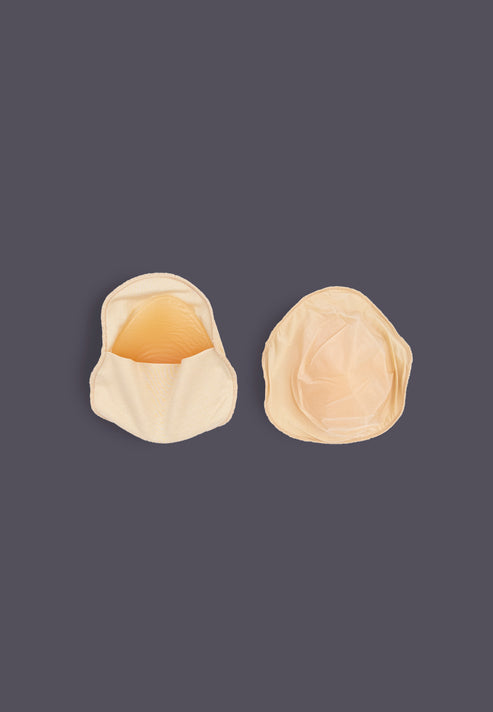
Using prosthesis pockets is recommended to help reduce movement and protect the prostheses from wear over time. These pouches can also help keep them positioned during wear.
How to use your breast prostheses
Instruction for tops:
Place the breast forms in the prosthesis pockets, and then insert them into the pouches of the top you want to wear them with. Make sure the top of the prostheses points upwards. With oval prostheses, the pointed side is the top; with triangular prostheses, the narrowest side is the top.
Put the top on and gently adjust the prostheses into the desired position. Watch the video below for a visual explanation:
Instruction for bathing suits or body suits:
Place the breast forms in the prosthesis pockets, and then insert them into the pouches of the bathing suit or bodysuit. Make sure the top of the prostheses points upwards. With oval prostheses, the pointed side is the top; with triangular prostheses, the narrowest side is the top.
Put the garment on and adjust the prostheses as needed. Watch the video below for a visual explanation:
How long can I wear my breast prostheses
You can wear your breast forms throughout the day, as long as you are comfortable and not experiencing irritation. Silicone breast prostheses can withstand salt and chlorine water; however, frequent or prolonged exposure may affect the material over time. Using prosthesis pockets can help reduce wear.
Cleaning your breast forms
Most breast forms can be cleaned using lukewarm water and mild soap. After rinsing, let them air dry on a towel (avoid direct sunlight). For hygiene, we recommend cleaning your prostheses after each use.
We hope this overview of breast prosthesis information has helped you make informed choices when selecting and using breast prostheses. Good luck!