

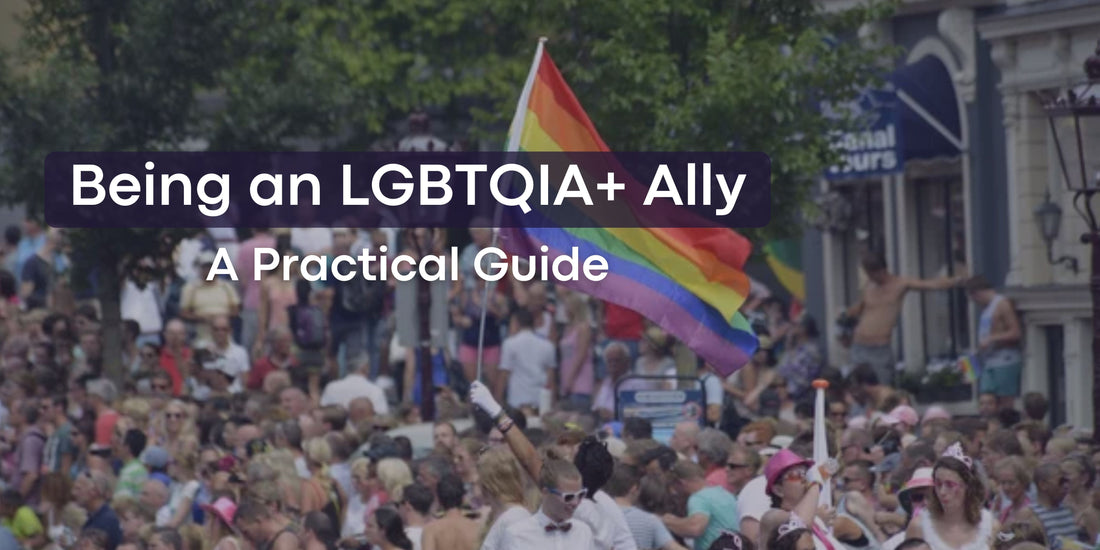
Standing with the LGBTQIA+ community takes more than good intentions. It takes action. Whether you're new to being an ally or want to step it up, this guide gives you practical ways to support queer, trans and non-binary people in your everyday life.
1. Start by listening and learning
Being an ally starts with listening. Don't assume you know what LGBTQIA+ people go through. Take the time to hear their stories, read their words and learn from their lived experiences.
📚 Read: Stonewall by Martin Duberman, The Transgender Issue by Shon Faye, or follow creators like Alok Vaid-Menon or Blair Imani on social media.
2. Respect names, pronouns and identities
Using someone's correct name and pronouns is basic respect. Not sure? It's okay to ask. And if you get it wrong, just correct yourself and move on without making it a big deal.
👋 You could start with: "Hi, I'm Alex, and my pronouns are she/they. What are yours?"
3. Call out anti-LGBTQIA+ behaviour
Hear a homophobic joke or a transphobic comment, or see someone being left out? Say something. Silence lets discrimination keep going. You don't need to be perfect. You just need to be there and willing to speak up.
🛑 Example: "That comment isn't okay. Here's why it matters."
4. Support queer-owned projects and spaces
Being an ally also means showing up with your wallet and your network. Buy from LGBTQIA+ creators and businesses, donate to community organisations and share their work with the people around you. That's how we build safer, more inclusive spaces.
🏳️🌈 Consider donating to: Transgender Europe, The Okra Project or your local LGBTQIA+ centre.
5. Use inclusive language
Small changes in how you talk can make a big difference. Don't assume someone's gender or relationship. Instead of "boyfriend/girlfriend", try "partner". Stick to gender-neutral terms until someone tells you how they identify.
🗣️ Say: "Are you seeing someone?" instead of "Do you have a boyfriend?"
6. Take charge of your own learning
It's not the job of LGBTQIA+ people to educate you, especially not about the basics. Go out and learn about queer history, gender diversity and the right terms yourself. There are loads of resources made just for this.
💡 Useful links to learn more:
7. Celebrate queer joy
Being an ally isn't only about standing up against discrimination. It's also about celebrating LGBTQIA+ people in their moments of joy, success, creativity and love. Pride is a protest, and it's a party too.
🎉 Share stories of queer love, art, culture and happiness.
Final thoughts
Being an ally isn't a one-time thing or a title you give yourself. It's something you keep doing for life: listening, showing up and doing better once you know better. You'll make mistakes, and that's okay. What matters most is that you're willing to grow and stand together.


